Introduction
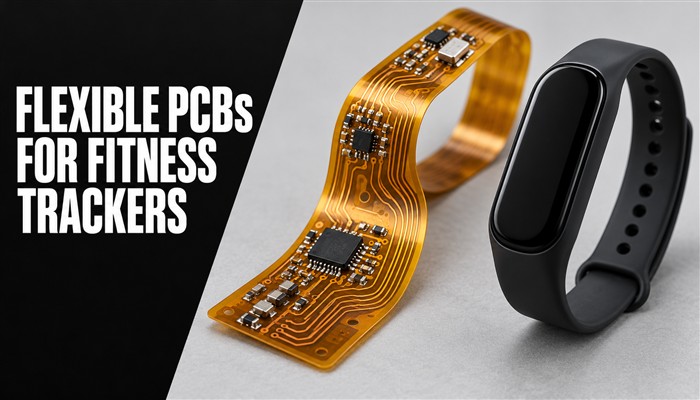
When you use flexible circuits, you require special connectors. The most common are FFC (Flat Flexible Cable) and FPC (Flexible Printed Circuit) connectors. Although they appear similar, they do have important differences that affect your design. Knowing the FFC vs FPC difference assists you in choosing the best solution for your project.
FFCs: Flat Flexible Cables

So, what is FFC? A Flat Flexible Cable, or FFC cable, offers a straightforward 1:1 link between your devices. It consists of flat parallel wires wrapped in a protective and flexible tape. This arrangement makes the FFC cable an excellent option for high-flex applications. It enables the cable to be flexed repeatedly without failing.
Types of FFCs
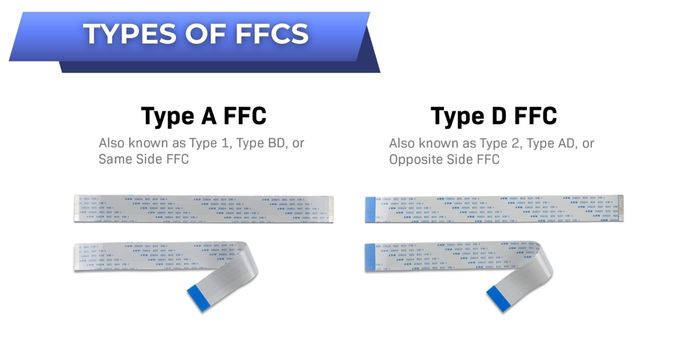
You will generally find two primary types of FFCs distinguished by the orientation of their contacts. It is this orientation that determines what FFC connector you must use in order to get a proper fit. Knowing the difference is essential to ordering the correct cable for your project.
- Type A (Same Side): The contact pads at both ends are on the same face of the cable.
- Type D (Opposite Side): The contact pads at one end are on the opposite face to those at the other end.
Parts of an FFC

An FFC cable consists of four key components that together provide a stable connection for your project. Each part has a distinct function. Knowing these parts allows you to select the appropriate FFC cable and FFC connector for your application.
- Wires: Flat conductive traces that transmit electrical signals between your devices.
- Pins: These individual contact points are present at both ends of the cable.
- Pitch: The specific distance between the two adjacent pins.
- Support Tape: This supporting layer protects the ends by providing easy insertion into connectors.
What FFCs are Made of
You will find that an FFC cable is made up of plain, but efficient materials. Every material has a specific role, ranging from carrying signals to offering support. Such simplicity in design guarantees flexibility and good performance for your application.
- Conductors: Tin-plated flat copper wires at the ends.
- Insulation: Flexible polyester material that protects and insulates the wires.
- Stiffeners: Thicker polyester strips on both ends for simple insertion into an FFC connector.
How FFCs Work
An FFC cable operates through establishing a direct 1:1 connection between two devices. Plugging the FFC cable into a compatible FFC connector creates a simple electrical path. Each pin on one end directly connects to the same pin on the other. It provides an easy way for signals and power to pass through your components, allowing them to properly communicate.
Common Uses of FFCs
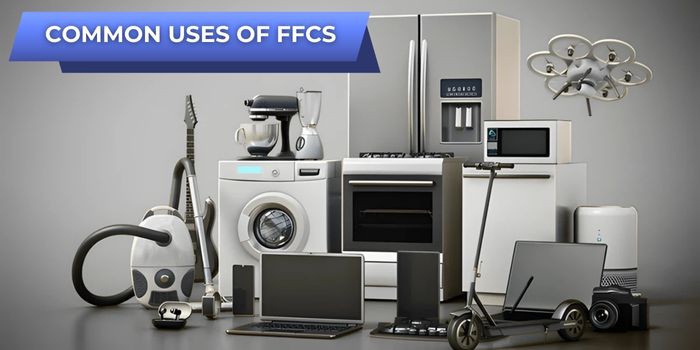
You can locate the FFC cable in millions of modern electronics because it has a highly versatile and space-saving design. Their flexibility makes them suitable for any application that involves tight spaces or moving components. Some applications for the FFC cable are:
- Consumer Electronics: Laptops, printers, and cameras.
- Automotive: Dashboards and infotainment systems.
- Robotics: Moving components such as robotic arms.
- Industrial Equipment: Automation machinery and systems.
- Medical Devices: Imaging devices and diagnostic equipment.
- Home Appliances: Washing machines, microwaves, and more.
FPCs: Flexible Printed Circuits

So, what is FPC? An FPC flexible circuit, or Flexible Printed Circuit, is similar to a regular circuit board but on a flexible substrate. You can fold and bend the circuits to fit into complex connections in very compact spaces. An FPC is a fully customizable circuit for a specific application, unlike a plain cable.
Parts of an FPC

An FPC flexible circuit has a number of key components that make its advanced functionality possible. You will learn that every part has an important function, ranging from signal conduction to structural support. Understanding these components makes it easier to distinguish between FFC and FPC.
- Substrate: This is the flexible base material that holds the whole circuit in place.
- Electrical Traces: These are the copper conductive pathways that pass signals over the FPC.
- Electrical Components: You can attach components such as resistors and integrated circuits directly to the FPC.
- Pins & Pinout: These are contact points and their specific layout for connecting to a device.
- Stiffener: This rigid material supports critical areas, particularly where you use an FPC connector.
- Through-hole: These plated holes connect the different conductive layers in a multi-layer FPC.
What FPCs are Made of
You can notice that an FPC flexible circuit is constructed in layers, each with a different material and function. It provides complex, three-dimensional designs because of the layered structure. It is one of the key factors when considering FPC vs FFC cable technologies.
- Base: A flexible polyimide or polyester film forms the foundation.
- Traces: A single layer or multiple layers of copper are attached to the base to form the circuit paths.
- Coverlay: A protective and insulating film made of polyimide covers the circuit surface.
- Stiffeners: The connection points are usually reinforced with epoxy and fiberglass to provide support.
- Contacts: The pins are tin or gold-plated for a reliable connection.
- Shielding: A layer of aluminum or copper foil may be added as an optional protection against electronic interference.
How FPCs Work
An FPC connects your devices with pins, similar to an FFC. But electrical signals take much more complex paths etched within the circuit. Signals travel along these custom traces, can be routed to mounted components, and even pass from one layer to another through conductive through-holes. This feature defines the FPC flexible circuit and its advanced uses.
Common Uses of FPCs

The FPC flexible circuit is available in advanced electronics where space, weight, and complicated connections are of high concern. They are essential to modern compact devices because they can be folded and shaped. Some applications for the FPC cable are:
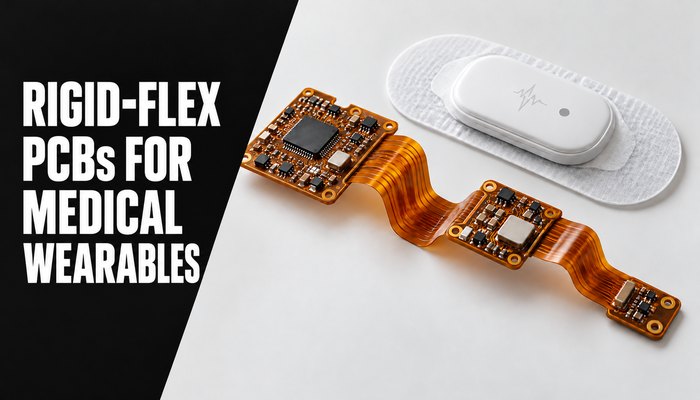
- Wearables: Smartwatches and health monitors use FPCs for sensors and processing.
- Aerospace: Satellites and navigation systems rely on lightweight FPCs.
- Consumer Electronics: They are important in smartphones, tablets, and digital cameras.
- Automotive: FPCs are utilized in advanced dashboard controls and driver-assistance systems.
- Medical Devices: They are used in diagnostic devices and wearable medical monitors.
- Industrial: High-end robotics and automation systems use FPCs for complex wiring.
FFC vs FPC: Pros and Cons

When deciding between FFC vs FPC cables, one must consider their strengths and weaknesses. The difference between FFC vs FPC is about complexity, expense, and use. Knowing these advantages and disadvantages allows you to pick the ideal solution for your project’s specific demands.
Advantages and Disadvantages of FFCs
An FFC cable provides an easy and inexpensive solution to many applications. You will find simplicity is its biggest benefit for projects that need simple, dependable connections. That simplicity, however, means it is not suitable for more complex electronic designs. Let’s examine the most important pros and cons you need to consider.
Advantages:
- High Flexibility: You’ll find their flexible materials are ideal for applications with frequent movement.
- Quick Setup: You can connect and disconnect them easily due to their simple 1:1 setup.
- Versatile: You can easily reuse an FFC cable in any project where a simple 1:1 connection is required.
- Cost-Effective: You’ll benefit from reduced expenses, as they tend to be less costly to produce than FPCs.
Disadvantages:
- Limited Complexity: You are restricted to basic connections, as they don’t have the capability to support complex circuit designs.
- Lower Durability: They are less durable than FPCs in harsh environments.
Advantages and Disadvantages of FPCs
An FPC flexible circuit offers a strong solution for complex and compact electronic designs. You can integrate entire circuits into a flexible form factor, which creates many possibilities. This high level of customization is more expensive and takes more design effort, which is one of the main differences between FFC and FPC.
Advantages:
- High Complexity: You can build highly complex, multi-layer circuits with surface-mounted components.
- Customizable: You have endless options for customization, so you can make them for very specific uses.
- High Flexibility: You get great performance in high-flex applications because of their flexible base material.
- Strong Durability: You can rely on their durability since they withstand heat and chemicals more than FFCs.
Disadvantages:
- Higher Cost: You should expect a higher cost because of their complex designs and manufacturing processes.
- Limited Reusability: You will find they have limited reusability, since every single one is meant for a specific task.
- Design Complexity: You will require more time for the design process, particularly for complex circuit patterns.
FFC vs FPC: Thickness

You’ll discover that FFC cables are built for durability in a range of standard thicknesses. They are 0.5mm, 0.8mm, 1.0mm, 1.25mm, 1.27mm, 1.5mm, 2.0mm and 2.54mm.
An FPC flexible circuit is much thinner, making it perfect for tight spaces. You can expect most of these circuits to measure 0.15mm to 0.2mm thick.
FFC vs FPC: Strict Production Standards
An FPC flexible circuit must satisfy strict manufacturing and quality regulations. They’re used in harsh, mission-critical military, medical, and aerospace devices where reliability is critical to life-saving functions. Due to this, FPCs have to undergo rigorous, mission-critical testing before use.
An FFC cable, however, typically does not need this same degree of strict quality control. FFC applications are usually less critical, and thus there can be more relax standards. This makes them a good and affordable option for a wide variety of consumer electronics.
FPC vs. FFC: Wiring
FPC flexible circuit wiring consists of chemically etching copper paths on a flexible polymer substrate. This highly advanced method enables you to achieve highly compact and complex circuit patterns. It provides the design freedom required for modern, lightweight electronics where space is limited and weight is a consideration.
In contrast, an FFC cable uses a very basic wiring configuration. It consists of parallel, straight copper wires, laminated with two layers of plastic. Its simple configuration is highly cost-effective to produce and is ideal for simple, high-density board-to-board connections in laptops and printers.
Differences in Manufacturing Between FFC and FPC
The core difference between FFC and FPC begins with production.
- You make an FFC cable by laminating flat copper wires between insulating layers.
- You make an FPC flexible circuit, however, by chemically etching complex circuits onto a substrate.
This basic difference determines each cable’s thickness, wiring complexity, and ideal application.
Differences Between FFCs and FPCs
FFC vs FPC vs Rigid Cable Comparison Table
To help you decide, let’s look at a direct comparison in the following table:
| Feature | FFC (Flexible Flat Cable) | FPC (Flexible Printed Circuit) | Rigid Cable |
| Function Complexity | Low | High | High |
| Customization Level | Low | High | Low |
| Thickness | Super Thin | Thin (Varies) | Thick |
| Overall Size | Small | Small (Varies) | Large |
| Weight | Light | Light | Heavy |
| Strength | Average | High | Varies |
| Price | Low | Moderate | High |
| Common Uses | • Consumer electronics
• Robotics |
• Wearable technology
• Industrial electronics |
• Industrial electronics
• Commercial energy |
| Main Advantages | Simple to use, cheap | Flexible, advanced functionality | Strong, durable |
| Main Disadvantages | Restricted functionality | Expensive | Large, low flexibility |
FPC vs. FFC: Inability to Replace Each Other
You cannot replace an FPC flexible circuit with an FFC cable. Their distinct production gives totally different physical and electrical characteristics. An FPC can be used to create complex circuit designs, and an FFC can be used to create simple and resistant connections. Each is designed to play a certain, non-interchangeable role in your project.
Choosing Between an FFC and FPC

The choice between an FFC vs FPC will depend on your project needs. In order to make a proper decision, you need to consider a few primary aspects. This will guide you as to what is essentially the difference between FFC and FPC in your application.
Complexity of Functions
For simple point-to-point applications where high flexibility is needed, you should use an FFC. When you have a complex circuit with numerous components, you will require an FPC.
Movement
If your application demands frequent and easy bending, an FFC is the best option. When you need a circuit to fit into tight or tight places, select an FPC.
Budget
For an economical option with easier design, you need to choose an FFC. Your budget has to be higher for the complex design of an FPC.
Environmental Conditions
You will be able to use an FFC in typical environments with ordinary temperatures. For tough conditions with exposure to heat or chemicals, you will require the superior durability of an FPC.
Space Constraints
An FFC is good in limited spaces where the path of connection is straightforward. You should choose to use an FPC if you must bend and fold the circuit into a close, complex shape.
MV Flex Circuit: Your Reliable Flexible PCB Manufacturer
When you require a manufacturing partner for your flexible circuit project, you can trust MV Flex Circuit. We are experts in producing and assembling high-quality flexible circuits. You can trust our staff of experts to take your specifications and turn them into a completed product that suits your specific requirements.
As a dedicated flexible PCB manufacturer, we also meet your FFC needs. Our factory stocks key materials such as polyimide and copper foil, allowing us to respond quickly to your project needs and support expedited production. Our production process strictly follows IPC Class 2/3 standards, ensuring product quality and meeting your requirements for global market access. We’ve handled the production and assembly of FPC solutions across sectors, from medical devices to aerospace and military defense.
Backed by our experience, you can confidently entrust your FPC projects to us. Send your Gerber files to sales@flexiblepcbboard.com. Simply let our professional engineering team arrange a free DFM check and quote for your project.
FAQs
Can You Shield an FFC?
Yes, you can. We apply a shielding tape layer to an FFC cable to shield it against interference. You can even have special applications with some pins attached to the shield directly.
What Does the “Pitch” of an FFC or FPC Mean?
Pitch refers to the distance between the center of one conductor and the next conductor. You must identify the pitch in order to find a matching cable with the right FFC or FPC connector.
What Is the Highest Density in Terms of Pins/Positions Available for FFC And FPC Connectors?
You will find that FPC connectors offer the highest density, with some having more than 200 positions at a small pitch of 0.1mm. For FFC connectors, the highest density will normally be more than 100 positions at a 0.3mm pitch.
Which Provides the Most Compact Footprint, FFC or FPC Connectors?
The FFC connector generally has a smaller footprint. Since the FFC cable itself is so thin, the mated connector can reach a profile of less than 1mm high.
Do You Stock FFCs and FPCs?
Yes, we carry a large selection of FFC cables. We can have prototypes for you made quickly. Though we carry some FPC flexible circuit components, most are custom-built to suit your project’s specific requirements.
Are There FPC Extension Cables Available to Extend FPCs?
Yes, they are. At MV Flex Circuit, we have various effective solutions to lengthen the length of an FPC.
What Factors Determine the Lifetime Durability of FFC Vs FPC Connectors?
The concept of durability rests on contact wear, material fatigue and alignment. You will find that FPC connectors are made to last longer with gold plating and careful alignment guides.
Conclusion
The decision between an FFC vs FPC solution is based on your particular application. You would use an FFC for straightforward, low-cost, point-to-point connections. You would use an FPC for complex, custom circuits that need to fit in compact spaces. By considering your project requirements for complexity and budget, you will be able to make the correct decision.
Contact MV Flex Circuit today and get a quote!