Introduction
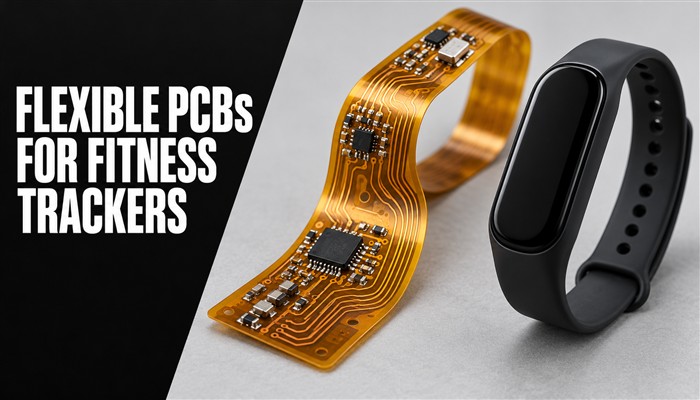
Flexible printed circuits are used extensively in medical devices that are smaller, lighter, more reliable, and conform to the anatomy of the human body. Wearable, implantable, and diagnostic health tech relies on microelectronic and nanosystems technology.
There has been a huge increase in demand for the miniaturization of medical electronics with flex circuits. Healthcare technology is evolving constantly, and so are the expected solutions. Flex PCBs are compact and can be used very dependably.
This article will discuss the main benefits of using flex PCB for medical applications. We will look at their various applications, including wearable medical sensor FPC, implantable devices, and the main things you have to keep in mind during design.
Why Are Flex PCBs Used in Medical Devices and Wearables?

The medical devices, with the help of flex PCBs, can be made smaller, lighter, and efficient. It lends weight to an industry-wide trend for miniaturization without compromising performance. Using flexible circuits, devices can be made compact, durable, and fit complex spaces, from handheld tools to the wearable medical sensor FPC. This makes them essential for modern healthcare technology.
Dynamic Flexing
Flexible circuits are ideal for assembly in medical applications due to their ability to bend and flex. Create flexible electronic devices that can flex and bend repeatedly. With this feature, you can design products that are stronger and lighter than those made on stiff boards. You can incorporate electronics into hinges or wearable sensors that mold to the body.
Reliability
When it comes to healthcare, there is no scope for product failure, thus making the reliability of the circuit a top priority. Flex circuits in medical devices do away with connectors and solder joints, which are usually the weak links in devices.
This streamlined design inherently boosts reliability. The base polyimide material is resistant to a wide assortment of chemicals and impacts, enabling the device to function despite shock or vibration.
Electrical Reliability
Flex materials enhance electrical performance, especially for fast signals. The constant thickness and dielectric constant provide high specificity of signals.
Space and Weight
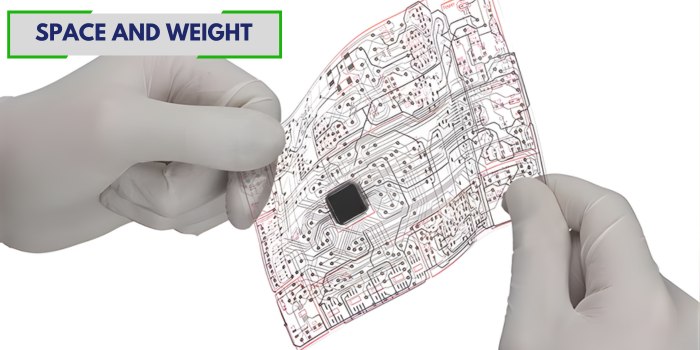
Flex circuits are used because of drives for miniaturization of medical electronics that uses flex circuits. Flexible PCBs have thinner insulation and copper layers compared to rigid PCBs. It lets you bend them tightly for fitting inside small enclosures. Hence, you can significantly cut down the overall size and weight of the end-product, which is important for portable, wearable medical devices.
High-Density Capabilities
The High-Density Interconnect technology helps you place more components in less space. Using an HDI flex for medical devices can allow you to take advantage of features such as microvias to help with complex routing in fewer layers. Not only does this save significant space, but it also enhances signal integrity. A flexible design can provide the same functionality as a much larger rigid board, but it will be smaller, lighter, and cheaper.
Applications of Flex PCBs in Medical Devices
Many medical devices make use of flex circuits. Due to their small size, lightweight, and robust nature, these can be used in varied applications. They can help you make your products smaller and more reliable. Flex PCBs have enabled the development of advanced medical devices like MRI machines.
Medical Wearables

Comfort and conformity are two key design requirements for a wearable medical sensor FPC. Flexible circuits can help you create ultralight health monitors that bend to fit the human body. This means it is perfect for EKG/ECG sensor circuits, continuous glucose monitors, and fitness trackers. The flex PCB connects all the components together into a slim package that a patient can wear comfortably for a long period.
Implantable Medical Devices

When you’re designing a device that goes inside the human body, you want it to be small, highly reliable, and biocompatible. Flexible PCBs for implantable devices perfectly meet these stringent requirements. You can make circuits for pacemakers, defibrillators, and cochlear implants, with biocompatible flex PCB materials. Due to their small size and proven reliability, they are essential for patient safety and device lifetime.
Hearing-assist Devices

With hearing aid flexible circuits, complex electronics can be packed into a sophisticated and ergonomic body of very small size. Use a single flexible circuit to connect the microphone, processor, and power source within the device’s curved housing.
This eliminates bulky wires and connectors. The result is a compact, dependable, and easy-to-use hearing aid that fits easily behind the ear.
Diagnostic Equipment
Flex circuits play an essential role in large imaging systems, such as CT scanners and MRI machines, to connect the moving parts. The detector arrays in a CT gantry, for example, must be wired to a data processing unit while spinning. FPC is a durable interconnect designed to provide reliable connections for more stationary applications.
This creates uniform performance and cuts mechanical faults.
Monitoring Devices
Flexible circuits help in bringing about portable and convenient patient monitoring systems. These tiny devices can help you craft small units that can keep a check on important parameters like heartbeat, blood pressure, and sugar levels. Flex circuits connect sensors, displays, and processors into a single integrated assembly. This makes the equipment lighter, more dependable, and more user-friendly for both the nurse and patient.
Surgical Instruments
- Flexible circuits increase precision in surgical applications. They are used in.
- It refers to surgical tools that enable smaller incisions and faster recoveries.
- Flexible probes and catheter systems aid in real-time diagnostics and targeted therapies.
- Robotic surgical systems enhance the control and feedback of surgeons during difficult surgeries.
Patient Monitoring Systems
- Flex circuits guarantee the reliability of continuous and remote monitoring solutions. Examples include.
- Flexible electrodes for ECG offer comfort and accurate heart monitoring.
- Equipment enabling patient oversight outside health centre environments.
- The continuous monitoring systems in intensive care units (ICUs) allow critical patient data to be tracked 24/7.
Advantages of Flex and Rigid-Flex PCBs in Medical Devices

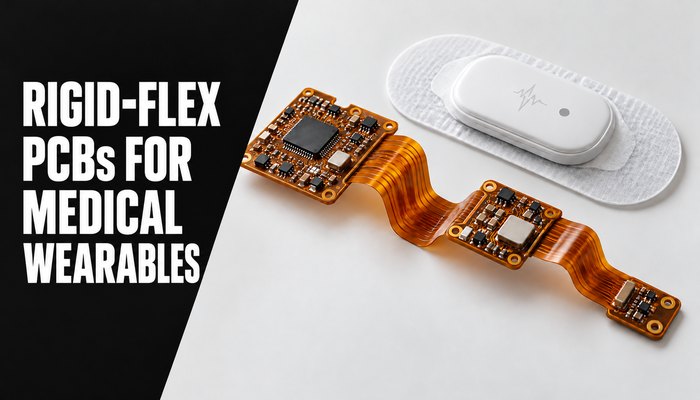
Flex and rigid-flex PCBs are advantageous as they enable the manufacture of smaller products with complex 3D shapes and improve reliability. They are indispensable for flex medical electronics miniaturization by eliminating space-consuming connectors and allowing compact mounting of components. Design freedom lets you create more compact and robust products for next-generation healthcare applications.
Here are the key benefits you gain when using them:
- By using tiny packages, Space Saver allows the mounting of components like microphones and batteries. It enables the making of tiny objects like hearing aids that can fit into the ear comfortably.
- Flex circuits can be designed in complex, three-dimensional shapes that have multiple branches, unlike a rigid board. You can put electronics into unique places that normally would not be able to be used.
- You improve the reliability of flex circuits in healthcare when you eliminate bulky connectors, which are a common source of failure. By creating a single part instead of multiple parts, a rigid-flex design helps in lessening the issues associated with connections.
- Enabling Advanced Applications: These features make flex circuits ideal for next-gen medical devices, from drug delivery systems to wearables. As applications progress, you can overcome the hurdles regarding medical flex PCB design with finer lines and thinner material.
Factors to Consider for Design in Modern Medical Equipment
When designing new medical flexible circuits, it is important to balance mechanical flexibility, layer stack-up, component placement, and the safety of materials. All these factors are important for creating a wearable gadget (like smartwatches) that works, lasts, and feels good. By encountering these issues of medical flex PCB design early, your products will surely be reliable as well as safe for patients.
Bend Radius and Flexibility
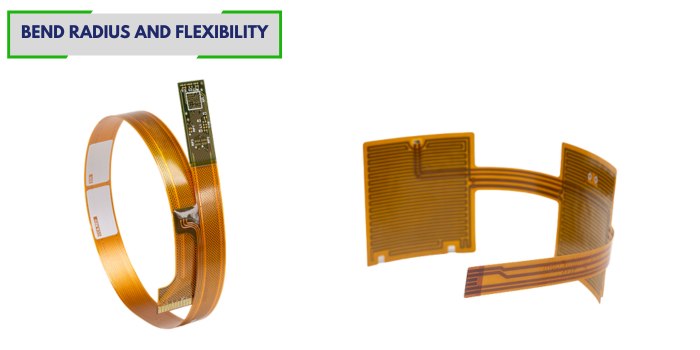
Figure out what bend radius is before you begin to design your circuit board. This is essentially how tightly your circuit can bend without getting damaged. When it comes to parts that flex repeatedly, it is wise to keep the bend radius at least ten times the thickness of the circuit. Bending it too sharply can crack the copper traces. Always design your product with the final application in mind so that it is reliable long-term.
Material Selection for Flexibility and Durability
It is essential that you select materials that achieve flexibility and mechanical durability. The polyimide substrates should have suitable copper and adhesive layers to withstand frequent bending. Most of these materials have excellent thermal stability and resistance to moisture, which is important for long-term medical use.
Layer Stack-Up
The layer stack-up you use affects how flexible the circuit is, along with other electrical characteristics. For making a wearable product, you will require fewer layers to keep your board thin and flexible. By placing high-speed signals on inner layers, you can help protect them. By utilizing staggered vias, strain is alleviated, minimizing parasitic effects for health sensors.
Component Placement
To protect solder joints from damage, place components in areas that are less likely to bend. Make use of lightweight and low-profile components to reduce stress and weight on the body. In the instances where mounting larger parts, such as connectors or ICs, is necessary, you may need to provide stiffeners in these areas.
Biocompatibility and Safety
It is imperative for material safety to be ensured since wearable medical devices are in direct contact with the skin. You want to use biocompatible flex PCB materials that comply with standards such as ISO 10993 to prevent allergic reactions or irritation. The safety of the patient must never be compromised. As most medical devices are worn by patients for long durations, a key focus of any medical device contract manufacturing partner is.
Compact Design Challenge
When we try to keep things small, we may end up with overlapping traces and routing issues. To prevent electrical interference and optimize delicate wearables in a limited space, a multilayer approach to structure and precise computer-aided design (CAD) tools is required.
Trace Design for Reliability Under Stress
Constant bending and moving may produce trace fractures over time. Create designs that have rounded corners with the same width and no sharp angles. To enhance the circuit’s life and avoid breaking, distribute the load evenly.
Reducing Complex Wiring with Smart Integration

Having too many wires can lead to difficult assembly and reliability issues. Using SMT and flexible vias to connect components simplifies connections, reduces bulk, and maximizes assembly efficiency.
Conforming to Unique Shapes
Wearable medical gadgets usually need circuits that can be fitted around curved surfaces. Use 3D modeling and simulation tools to visualize fitment and optimize the shape of flex PCBs that bend and attach without straining materials.
Effective Thermal Management Strategies
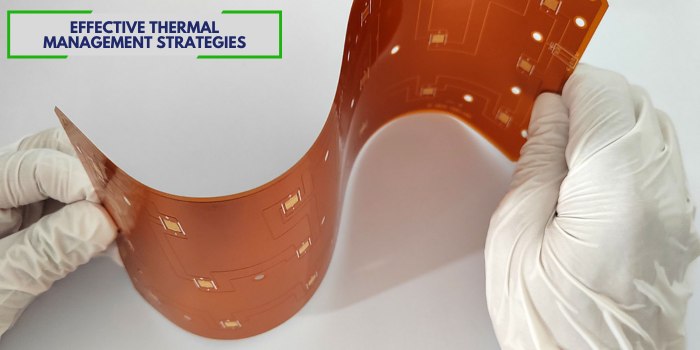
Heat accumulation can harm materials and change sensor performance. Opt for a heat-spreading layer; use a substrate; ventilate. Adding tiny heat sinks or metal pathways can help devices work better and last longer.
Testing Protocols for Real-World Reliability
Flex circuits have to pass many reliability tests for a long lifespan. Use specialized flex testing equipment to simulate repeated bending, stretching, and temperature cycling. Testing guarantees that your design can withstand real-life situations in the medical field.
Emerging Innovations and Future Trends in Flex PCBs for Medical Devices
Flexible PCBs are making medical technology smaller, smarter, and more diverse in applications. Here are the key trends driving their future.
- Develops small devices like ECG patches and glucose monitoring patches.
- Flexible 3D PCBs are highly useful for surgical applications, including implants and diagnostic devices.
- Materials that are safe for the body make devices, such as pacemakers and neural interfaces, safer for the user.
- Stretchable and Foldable PCBs allow movement of the body while being implanted in elbow joints and others, such as sensors for wearable devices.
- Get the circuits connected to the sensor for remote diagnostics and real-time monitoring.
- Flexible Hybrid Electronics (FHE) combine rigid and flexible elements to create comfortable adaptive medical patches.
- Smart medical systems that collect, share, and analyze patients’ data for better treatment outcomes.
- Advancements in medical-grade flexible circuits are enabling the development of medical devices that are safer, more effective, and more patient-friendly.
MV Flex Circuit: Your Medical PCB Manufacturer
As a professional flexible and rigid-flex PCB manufacturing factory, we bring 20+ years of project experience in the medical industry. Specializing in manufacturing and assembling flex PCBs for medical products like wearable health monitors, implantable devices, diagnostic equipment, and more.
We hold ISO 13485 certification and can manufacture/assemble your boards to IPC Class 3 standards as needed, ensuring the highest reliability for critical medical applications. Every product undergoes 100% E-testing, and we also offer customized tests like Functional Circuit Testing to meet your quality requirements.
From prototype development to mass production, we prioritize precision, biocompatibility, and long-term reliability. Ready to bring your medical flex PCB project to life? Send your Gerber files, BOM, or project requirements to sales@flexiblepcbboard.com. Our team will provide a tailored solution, complete with design review and a detailed quote.
FAQs
How To Get Through the Design Challenges of Medical and Wearable Devices?
Using rigid-flex circuits can help you solve the common problems associated with medical flex PCB design. Wearable devices often require high-density interconnect (HDI) flex for medical designs that must fit into small, irregular shapes. A rigid-flex design gives you exceptional flexibility for placement and routing of components. This allows you to fold the final assembly into an envelope that fits perfectly into the enclosure of your product.
Conclusion
Modern medical devices are more reliant than ever upon flexible and rigid-flex circuits as a mainstream design solution these days. You could design the future of healthcare technology by enabling 3D configurations, reducing dimensions and weight, and enhancing functionality remarkably. The advantages of patient monitoring systems and surgical tools are evident.
When you choose MV Flex Circuit, you choose innovation, quality, and reliability for your devices. We manufacture medical-grade flexible circuits with ISO13485 certification, advanced shielding processes, and world-class manufacturing. Bring your vision to life with our product design and development assistance. Our team can help you design flexible printed circuit boards (PCBs) for any conceptualization – wearable sensors, implantable devices, or diagnostic tools. We can work together towards the development of next-gen medical technology.